What is the importance of godly music?
1 || It is a part of God’s worship
Music forms a part of God’s worship in the courts above, and we should endeavor, in our songs of praise, to approach as nearly as possible to the harmony of the heavenly choirs. The proper training of the voice is an important feature in education, and should not be neglected. Singing, as a part of religious service, is as much an act of worship as is prayer. The heart must feel the spirit of the song, to give it right expression. —Christian Education, 62.
2 || It draws God’s people to Him and to fellow believers
The value of song as a means of education should never be lost sight of. Let there be singing in the home, of songs that are sweet and pure, and there will be fewer words of censure and more of cheerfulness and hope and joy. Let there be singing in the school, and the pupils will be drawn closer to God, to their teachers, and to one another. —Voice in Speech and Song, 408
3 || It impresses the heart with spiritual truth
It is one of the most effective means of impressing the heart with spiritual truth. How often to the soul hard-pressed and ready to despair memory recalls some word of God’s—the long-forgotten burden of a childhood song—and temptations lose their power, life takes on new meaning and new purpose, and courage and gladness are imparted to other souls!

4 || It was one of the main subjects in the school of the prophets
The chief subjects of study in these schools were the law of God, with the instruction given to Moses, sacred history, sacred music, and poetry…. Sanctified intellect brought forth from the treasure house of God things new and old, and the Spirit of God was manifested in prophecy and sacred song.—Education, 47
5 || It is a means of retaining God’s law in the mind
Accordingly Moses directed the Israelites to set the words of the law to music. While the older children played on instruments, the younger ones marched, singing in concert the song of God’s commandments. In later years they retained in their minds the words of the law which they learned during childhood.
If it was essential for Moses to embody the commandments in sacred song, so that as they marched in the wilderness, the children could learn to sing the law verse by verse, how essential it is at this time to teach our children God’s Word! Let us come up to the help of the Lord, instructing our children to keep the commandments to the letter. Let us do everything in our power to make music in our homes, that God may come in.—Evangelism, 499, 500.
6 || It is a means of thanking God for His goodness
The commandments and promises of the Lord were set to music, and all along the journey these were sung by the pilgrim travelers. And in Canaan as they met at their sacred feasts God’s wonderful works were to be recounted, and grateful thanksgiving was to be offered to His name. God desired that the whole life of His people should be a life of praise. Thus His way was to be made “known upon earth,” His “saving health among all nations.” Psalm 67:2. COL 298.4

Is there such thing as the “bad” kind of music?
A view of one such company was presented to me, where were assembled those who profess to believe the truth. One was seated at the instrument of music, and such songs were poured forth as made the watching angels weep. There was mirth, there was coarse laughter, there was abundance of enthusiasm and a kind of inspiration; but the joy was such as Satan only is able to create. This is an enthusiasm and infatuation of which all who love God will be ashamed. It prepares the participants for unholy thought and action. I have reason to think that some who were engaged in that scene heartily repented of the shameful performance. —Counsels to Teachers, Parents, and Students, 339, 340.
The history of the songs of the Bible is full of suggestion as to the uses and benefits of music and song. Music is often perverted to serve purposes of evil, and it thus becomes one of the most alluring agencies of temptation. But, rightly employed, it is a precious gift of God, designed to uplift the thoughts to high and noble themes, to inspire and elevate the soul. —Voice in Speech and Song, 407.

A love for music leads the unwary to unite with world-lovers in pleasure-gatherings where God has forbidden his children to go. Thus that which is a great blessing when rightly used, becomes one of the most successful agencies by which Satan allures the mind from duty and from the contemplation of eternal things. —Christian Education, 62.3
I was shown that the youth must take a higher stand and make the word of God the man of their counsel and their guide. Solemn responsibilities rest upon the young, which they lightly regard. The introduction of music into their homes, instead of inciting to holiness and spirituality, has been the means of diverting their minds from the truth. Frivolous songs and the popular sheet music of the day seem congenial to their taste. The instruments of music have taken time which should have been devoted to prayer. Music, when not abused, is a great blessing; but when put to a wrong use, it is a terrible curse. It excites, but does not impart that strength and courage which the Christian can find only at the throne of grace while humbly making known his wants and, with strong cries and tears pleading for heavenly strength to be fortified against the powerful temptations of the evil one. Satan is leading the young captive. Oh, what can I say to lead them to break his power of infatuation! He is a skillful charmer, luring them on to perdition.—Testimonies for the Church 1:496, 497
How can I be a “balanced” musician?
To cook well and to present healthful food upon the table in an inviting manner, require intelligence and experience. The one who prepares food that is to be placed in our stomachs, to be converted into blood to nourish the system, occupies a most important and elevated position. The position of copyist, dress-maker, or music teacher, cannot equal in importance that of the cook.—Christian Education, 21.2
The skillful preparation of food is one of the most essential arts, standing above music teaching or dressmaking. By this I do not mean to discount music teaching or dressmaking, for they are essential. But more important still is the art of preparing food so that it is both healthful and appetizing. This art should be regarded as the most valuable of all the arts, because it is so closely connected with life. It should receive more attention; for in order to make good blood, the system requires good food. The foundation of that which keeps people in health is the medical missionary work of good cooking.—Manuscript 95, 1901
Before children take lessons on the organ or the piano they should be given lessons in cooking. The work of learning to cook need not exclude music, but to learn music is of less importance than to learn how to prepare food that is wholesome and appetizing.—Manuscript 95, 1901
Your daughters may love music, and this may be all right; it may add to the happiness of the family; but the knowledge of music without the knowledge of cookery, is not worth much. When your daughters have families of their own, an understanding of music and fancywork will not provide for the table a well-cooked dinner, prepared with nicety, so that they will not blush to place it before their most esteemed friends. Mothers, yours is a sacred work. May God help you to take it up with His glory in view, and work earnestly, patiently, and lovingly, for the present and future good of your children, having an eye single to the glory of God.—Testimonies for the Church 2:538, 539, 1870
But it is sometimes more difficult to discipline the singers and keep them in working order, than to improve the habits of praying and exhorting. Many want to do things after their own style; they object to consultation, and are impatient under leadership. Well-matured plans are needed in the service of God. Common sense is an excellent thing in the worship of the Lord.—Gospel Workers, 325 (1892).
The human voice that sings the music of God from a heart filled with gratitude and thanksgiving is far more pleasing to Him than the melody of all the musical instruments ever invented by human hands.—Letter 2c, 1892.
The heart service is what God requires; the forms and lip service are as sounding brass and a tinkling cymbal. Your singing is for display, not to praise God with the spirit and understanding. The state of the heart reveals the quality of the religion of the professor of godliness.—Letter 1a, 1890.
You may have a good knowledge of the arts, you may have an acquaintance with the sciences, you may excel in music and in penmanship, your manners may please your associates, but what have these things to do with a preparation for heaven? What have they to do to prepare you to stand before the tribunal of God?—Testimonies for the Church 2:266, 267
How should music be employed in worship & evangelism?
1 || By letting Christ be uplifted in every song
The science of salvation is to be the burden of every sermon, the theme of every song. Let it be poured forth in every supplication.—Manuscript 107, 1898.
2 || The song service should not be made into a concert
The presentation before me was that if Elder _____ would heed the counsel of his brethren, and not rush on in the way he does in making a great effort to secure large congregations, he would have more influence for good, and his work would have a more telling effect. He should cut off from his meetings everything that has a semblance of theatrical display; for such outward appearances give no strength to the message that he bears. When the Lord can co-operate with him, his work will not need to be done in so expensive a manner. He will not need then to go to so much expense in advertising his meetings. He will not place so much dependence on the musical program. This part of his services is conducted more after the order of a concert in a theater, than a song service in a religious meeting.—Letter 49, 1902.
3 || Music is not to take too much time away from the preaching and reading of God’s word
The hearts of many in the world as well as many church members are hungering for the bread of life and thirsting for the waters of salvation. They are interested in the service of song, but they are not longing for that or even prayer. They want to know the Scriptures. What saith the Word of God to me? The Holy Spirit is working on mind and heart, drawing them to the bread of life. They see everything round them changing. Human feelings, human ideas of what constitutes religion, change. They come to hear the Word just as it reads.—Manuscript 11, 1899.
But singing should not be allowed to divert the mind from the hours of devotion. If one must be neglected, let it be the singing.—The Review and Herald, July 24, 1883.
The churches are fast being converted to the world. They have beautiful music and splendid decorations. But they are fruitless trees, bearing nothing but leaves. As the Lord unmasked the fig tree, so He will unmask these pretentious hypocrites.—Letter 45, 1891
4 || Song service should be organized and well-planned
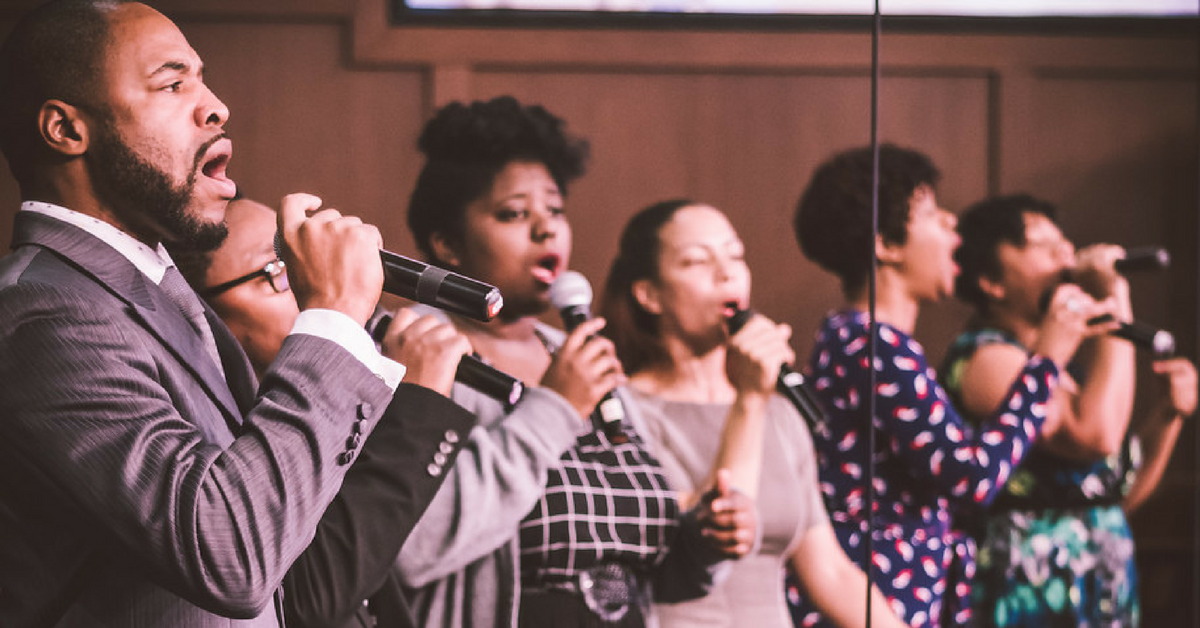
Music can be a great power for good; yet we do not make the most of this branch of worship. The singing is generally done from impulse or to meet special cases, and at other times those who sing are left to blunder along, and the music loses its proper effect upon the minds of those present. Music should have beauty, pathos, and power. Let the voices be lifted in songs of praise and devotion. Call to your aid, if practicable, instrumental music, and let the glorious harmony ascend to God, an acceptable offering. —Evangelism, 505.1
Singing is a part of the worship of God, but in the bungling manner in which it is often conducted, it is no credit to the truth, and no honor to God. There should be system and order in this as well as every other part of the Lord’s work. Organize a company of the best singers, whose voices can lead the congregation, and then let all who will, unite with them. Those who sing should make an effort to sing in harmony; they should devote some time to practice, that they may employ this talent to the glory of God. Ev 506.2
6 || Music in house-to-house ministry
Students, go out into the highways and the hedges. Endeavor to reach the higher as well as the lower classes. Enter the homes of the rich and the poor, and as you have opportunity, ask, “Would you be pleased to have us sing? We should be glad to hold a song service with you.” Then as hearts are softened, the way may open for you to offer a few words of prayer for the blessing of God. Not many will refuse.—The Review and Herald, August 27, 1903.
Learn to sing the simplest of songs. These will help you in house-to-house labor, and hearts will be touched by the influence of the Holy Spirit…. We learn from the Word that there is joy among the angels over one repentant sinner, and that the Lord Himself rejoices over His church with singing.—The Review and Herald, November 11, 1902.
Learn more about our services as music missionaries

Read Our Music Blog on Related Topics